


Home
 BlogCopywriting SolutionsHow to Write Responsible Gambling Messages Without Empty Phrases
BlogCopywriting SolutionsHow to Write Responsible Gambling Messages Without Empty Phrases
How to Write Responsible Gambling Messages Without Empty Phrases
Copywriting SolutionsIn our research, Responsible Gambling messages often miss their objective. Users ignore it when it feels dry, repetitive, or disconnected from reality. Read the article to learn how to change the situation.
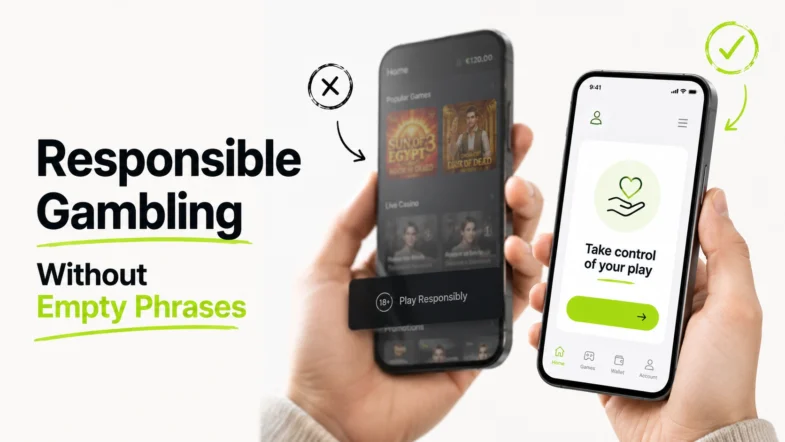
Most Responsible Gambling messages fail long before users even read them. The problem is usually not the regulation itself, but timing, placement, and tone. You see the same pattern everywhere – regulator logos lined up, and a small «Play responsibly» note hidden at the bottom of a page. In some cases, the Responsible Gambling messaging does the opposite of what it should. A 2025 study by GambleAware found that safer gambling videos from operators sometimes gave off a «harmless fun» vibe. This effect was most pronounced among younger users and people already at risk. In this article, our experts will discuss ways to change the situation and make Responsible Gambling messages actually helpful to users.
Why «Play Responsibly» Doesn’t Work Anymore
According to multiple studies, the uptake of Responsible Gambling resources has been low. A study in British Columbia by Cohen, McCormick, and Davies found that only about 5% of gamblers at moderate to high risk signed up for the province’s self-exclusion program. In Australia, the pattern looks similar. One operator reported that just 1,600 out of 200,000 active users (around 0.8%) set a deposit limit. Only 900 users, or 0.45%, chose to self-exclude.
In our opinion, improving the way Responsible Gambling content is written might help encourage users to control their entertainment.
Tone Matters More Than Wording
Responsible Gambling recommendations work the best when they sound calm and respectful to the reader. Focus the reader’s attention on staying in control and enjoying the playing experience.
Give people clear and simple guidance they can follow. Keep the tone supportive, not pushy. A supportive tone acknowledges the possibility of gambling addiction without lecturing. It points toward a resource without making the reader feel judged for needing it. Be sure to state facts, offer tools, but leave the decision to the reader. Don’t repeat the warning twice, add exclamation points, and frame every bet as a potential catastrophe. Respect the reader’s intelligence.
See the table below for examples of good and bad Responsible Gambling messages.
| Dry Tone | Supportive Tone |
| «Gambling can be addictive. Please gamble responsibly.» | «If gambling stops feeling like entertainment, there are tools that can help.» |
| «Set your limits before you play.» | «Deposit limits exist – they take 30 seconds to set and work immediately.» |
| «Do not chase losses.» | «A losing streak is a normal part of gambling. Chasing it rarely changes the outcome.» |
Context Is Everything: Where RG Messages Actually Belong
Another important consideration is the placement of the Responsible Gambling message. Imagine a player on a losing streak at midnight. The user will not navigate to the footer, find the Responsible Gambling section, and read through the available tools. That’s not how distress works. The message needs to meet the player where the risk actually exists. As an example, right in the lobby or as a push notification, reminding the user about the time and funds spent, and ways to stop in case it has not been planned. There must be no deliberate search to find a message.
A deposit limit recommendation should appear before the transaction, not after it. A session reminder should trigger after an hour of continuous play, not in settings the user rarely opens. A cooling-off message should appear when a player attempts a third consecutive redeposit, not in a newsletter two days later.
Where Responsible Gambling Messages Usually Fail
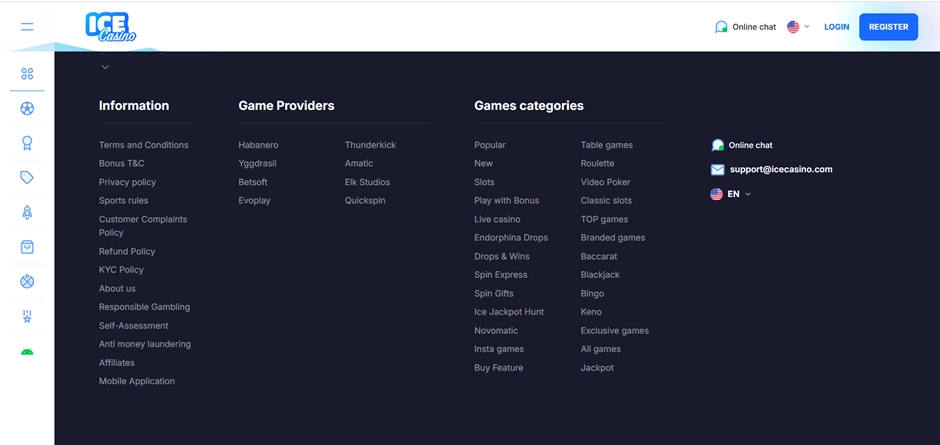
Many Responsible Gambling messages fail not because the idea itself is wrong, but because the communication appears at the wrong moment or in the wrong format. In many cases, users either ignore the message completely or stop воспринимать it as something relevant after seeing the same wording too many times.
Based on how Responsible Gambling systems are usually structured across gambling platforms, several recurring communication problems appear again and again.
| Problem | What Usually Happens |
| Generic wording | Users stop paying attention to the message |
| Poor timing | The recommendation appears too late |
| Hidden placement | Players never notice available tools |
| Overly aggressive tone | Users emotionally disconnect from the message |
| Too much information at once | The message becomes overwhelming and gets ignored |
| Repetitive warnings | Players stop reacting after repeated exposure |
| No direct action available | Users understand the warning but don’t know what to do next |
The biggest issue is that many Responsible Gambling messages are built more like legal disclaimers than actual communication tools. When the wording feels repetitive, badly timed, or disconnected from the player’s real situation, even useful tools become much easier to ignore.
How Empty Phrases Increase Distrust
Players always notice when Responsible Gambling content exists to cover liability rather than help them. Instead of using generic phrases, like «know when to stop», learn what your audience actually needs.
Read also our article: Stop Boring Clients: Business Writing Tricks That Actually Work
As an example, respondents in the study of Gainsbury, Abarbanel, Philander, and Butler mentioned that Responsible Gambling messages should remind people what overspending leads to and keep their expectations grounded. Make it clear that the odds don’t favor the player and that, over time, the house comes out ahead. Some gamblers also pointed out the value of plain wording. Using «gamble» and «gambler» instead of softer terms like «play» or «player» keeps the focus on risk and chance.
Examples of Meaningful RG Messaging (Without Emotional Pressure)
The goal of Responsible Gambling messaging is not to make the player feel bad. It’s to give them accurate information at a useful moment, then leave the decision to them. Based on our experience with Responsible Gambling messaging, we’ve specified the key principles and examples that can help you improve your wording:
- Make the tool visible, not the risk. Your messaging should point toward an action (set a limit, take a break) rather than describe the consequences of not taking it. Players already know gambling involves risk. What they need is an easy path to the instrument, not another reminder of the risk. Example: «Deposit limits take 30 seconds to set and apply immediately. You can adjust them anytime in your account settings.»
- Avoid the word «problem». Framing Responsible Gambling content around the concept of a «problem» creates a space most people won’t see themselves included in. The message that starts with «If you think you have a problem» filters out users who aren’t ready to use that word about themselves. Example: «If gambling feels less like entertainment and more like something you need to do, our self-exclusion tool is there.»
- One message, one action. A Responsible Gambling notification that contains three links, two mobile phone numbers, and a paragraph of text asks too much of the user in a difficult moment. One clear next step is more likely to produce a response than an information dump.
Why Responsible Gambling Messaging Needs to Feel Human
Responsible Gambling messages work best when they feel natural, timely, and connected to real player behavior. Users rarely respond to generic warnings placed far away from the moment risk actually appears.
The most effective RG communication is usually simple, visible, and action-oriented. Instead of repeating empty phrases, strong messaging helps users make clearer decisions without sounding aggressive or performative.
In practice, Responsible Gambling messaging becomes more effective when it feels like part of the user experience rather than a legal disclaimer added at the end of the page.
FAQ
Are There Any Revolutionary Ideas in Promoting Responsible Gambling?
Yes. Among revolutionary ideas, there is a case in which Flories Assies worked with Casino.nl to promote MyStride Positive Play, an instrument that offers mini-games between sessions. By giving users small games that require them to think, you activate their prefrontal cortex, which affects how much dopamine is released.
Should Responsible Gambling Messages Repeat Often?
No. Responsible Gambling messages stop working when people see them too often. Fresh wording cuts through that. When the message feels new, people notice it and are more likely to remember it.
What Is the Most Successful Responsible Gambling Message?
In an Australian study, 4,000 gamblers were asked to rate ten loss-focused messages, including both existing ones and new versions created for the research. The message that stood out most was a new one: «99% of gamblers lose in the long run».
What Is the Most Important Principle of Gambling Advertisement?
The most important principle is non-exploitation. Gambling advertisements should never target people who are already vulnerable or hint that gambling can fix money problems. It is not a solution for financial stress. It should stay what it is – a form of entertainment.



You might also like
Discover other helpful articles handpicked for you, based on popular topics and recent publications.

What is the difference between translation and localization? Translation means replacing words with their equivalents in another language, while localization involves adapting the entire user experience. Let's check the real difference!
 May 20, 2026
 373
373

Tired of writing emails and posts that clients ignore? Business writing doesn’t have to be boring. With just 6 simple tricks, from strong headlines to clear CTAs, you can turn dry texts into engaging messages.
 May 13, 2026
422
May 13, 2026
422

Every copy looks similar – until you see the process behind it. This article breaks down why expert copywriting agencies charge more, what truly goes into their work, and how to tell the difference between words that fill space and content that drives growth.
May 13, 2026
406

We-Right Factory content writers will explain how to create honest casino reviews that rank very high in search engines. We will share 10 recommendations we use ourselves and provide detailed examples.
May 13, 2026
759

“Companies don’t just want content — they want results: stronger SEO, trust, and customer loyalty. Outsourcing delivers exactly that — quickly, professionally, and with purpose,” say the experts at We–Right Factory.
September 28, 2025
504
Your First 1,000 Words,
Free of Charge
Free of Charge
See firsthand the quality of our content creation services. Complete the form to get a personalized 1,000-word sample tailored to your needs.