
 EN
EN
 UA
UA
Home
 BlogWriting Basics20 Famous Adages and Their Meanings Explained
BlogWriting Basics20 Famous Adages and Their Meanings Explained
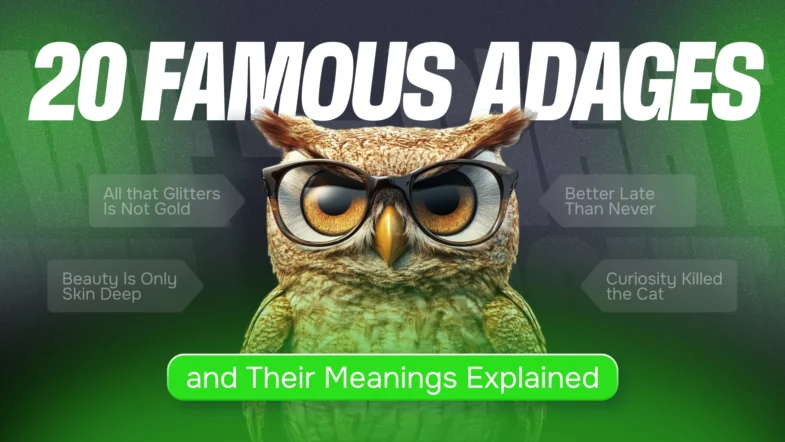
20 Famous Adages and Their Meanings Explained
Writing BasicsDiscover the meaning of adage phrases and how they help writers add depth and relatability to their work. Explore 20 timeless examples and the lessons they teach.
An adage is a short, sharp line of truth – a phrase that has lived through centuries because it still rings true today. Think of “Time is money” or “Actions speak louder than words.” These sayings have roots in real human experience and continue to shape how we communicate ideas.
At We-Right Factory, we see adages as one of writing’s simplest but most powerful tools. They let you express a complex thought in just a few words – the kind that stay with readers long after they finish your text.
Exploring the Concept of Adages
According to the Merriam-Webster dictionary, an adage is a saying often provided in metaphorical form that typically embodies a common observation. These are simple phrases with deep meaning, like «A penny saved is a penny earned». The meaning of the adage is that saving money equals making money.
You can often meet adages in literature. One excellent example is Poor Richard’s Almanack from Benjamin Franklin. These are the phrases that this book contains:
- A penny saved is a penny earned.
- An ounce of prevention is worth a pound of cure.
- Eat to live, and not live to eat.
- Early to bed and early to rise makes a man healthy, wealthy, and wise.
- Fish and visitors stink after three days.
- Little strokes fell great oaks.
- Well done is better than well said.

How Adages Strengthen Copywriting
At We-Right Factory, we’ve noticed that adages work like shortcuts in communication. They instantly trigger recognition – readers already know their meaning, so the message becomes clearer and more emotional without extra words.
From our experience, one well-chosen adage can make a headline more memorable or a paragraph more persuasive. It gives rhythm, authority, and a natural flow to the text – qualities that keep readers engaged.
In our daily writing, adages often help:
- Emphasize a moral or key takeaway in long reads;
- Make complex ideas sound simple and familiar;
- Strengthen tone in storytelling and opinion pieces;
- Build emotional connection through shared cultural wisdom.
We’ve also seen how adages improve text recall. When readers recognize a familiar phrase, they’re more likely to remember the content that follows. Used carefully, these short forms of wisdom give writing authenticity and depth without sounding forced.
20 Popular Adages and What They Teach Us
Over the years, our copywriters have collected adages that fit different types of content — from lifestyle blogs to brand storytelling. Some add warmth, others emphasize a point, but all share one trait: they compress real human experience into just a few words.
Here we share twenty of the most recognizable adages we actually use in our work. They appear not only in literature and speeches but also in marketing campaigns and taglines — because adages turn timeless truths into language modern readers still trust.
Each example below proves one idea: short, thoughtful phrasing can carry more weight than entire paragraphs. Adages teach balance, patience, courage, and perspective — the same principles that define good writing.

1. A Journey of a Thousand Miles Begins with a Single Step
Every large undertaking starts with one small action. Progress happens only through beginning, not through waiting for the perfect moment. For example:
- Writing a 4,000-word paper feels overwhelming, but I will tackle 500 words daily. Even the longest journey starts with that first step.
2. All that Glitters Is Not Gold
Attractive appearances can be deceiving. What looks valuable on the surface might lack real substance underneath. For example:
- I want to be a movie star when I grow up.
- The film industry looks glamorous, but it has serious downsides. Not all that shines is worth chasing.
3. A Ship in the Harbor is Safe, But That’s Not What a Ship is for
Staying comfortable keeps you safe, but it also prevents growth. An actual purpose lies in venturing beyond familiar boundaries. For example:
- Your fears about the Hungary trip seem overblown. Ships weren’t built to sit in harbors forever.
4. As You Sow, So You Shall Reap
Your actions create corresponding consequences. So, what you put into the world comes back to you eventually. For example:
- Those fraud charges stem from your shady shortcuts to wealth. You planted bad seeds, and now you’re harvesting the results.
5. Beauty Is in the Eye of the Beholder
People perceive attractiveness differently. What appeals to one person might leave another unmoved. For example:
- You might dislike my new car’s design, but I find it stunning. Beauty depends on who’s looking.
6. Beauty Is Only Skin Deep
The meaning of adage hints that physical appearance matters far less than character and inner qualities. A pretty face can hide an unpleasant personality. For example:
- The actress treated the driver terribly despite her glamorous image. Excellent looks don’t guarantee a good person underneath.
7. Beggars Cannot Be Choosers
Those who depend on others’ generosity should accept what’s offered. You lose the right to be picky when you’re asking for help. For example:
- I borrowed this jacket from my friend, but it’s not his best one.
- You’re getting it for free. Take what you can get.
8. Best Things in Life Are Free
The most valuable experiences cost nothing. Nature, relationships, and simple joys outweigh material possessions. For example:
- The mountain air and natural beauty have completely refreshed me. Money can’t buy what matters most.
9. Better Late Than Never
Achieving something eventually beats never achieving it at all. Timing matters less than actually doing what’s important. For example:
- I’m starting graduate school at 35, but at least I’m finally doing it.
Read also our article: What Are Modal Verbs in English Grammar: A Beginner’s Guide
10. Birds of a Feather Flock Together
People naturally gravitate toward others like themselves. Similar personalities tend to form groups. For example:
- You mostly spend time with people from the same background. Like attracts like, I guess.
11. Clothes Do Not Make a Man
Outward appearance reveals nothing about character. You can’t judge someone’s true nature by how they dress. For example:
- I can’t believe he has been charged with insider trading. He always looked so polished and professional.
- Looking good doesn’t mean being good.
12. Curiosity Killed the Cat
Prying into matters that do not concern you invites trouble. Some things are better left alone. For example:
- I know I’m playing with fire here, but I need to find out where those donations actually end up.
13. Don’t Bite the Hand That Feeds You
The meaning of adage is a recommendation to treat your benefactors with respect. Turning against someone who helps you risks losing that support. For example:
- Don’t trash your mentor over something this insignificant. If he cuts ties or bad-mouths you, that could really damage your prospects.
14. Don’t Judge a Book by Its Cover
Outward appearances don’t reveal what’s inside. First impressions can mislead you about someone’s true nature. For example:
- He comes across as arrogant, but he may be decent once you get to know him better. Surface impressions aren’t always accurate.
15. Don’t Put All Your Eggs in One Basket
Spreading the efforts across multiple options reduces risk. Concentrating everything in one place means losing everything if it fails. For example:
- The company gets nearly all its revenue from Facebook. One policy change could destroy them. They need to diversify before it’s too late.
16. Early Bird Catches the Worm
The meaning of adage is that starting ahead of others gives you an advantage. Those who act first get the best opportunities. For example:
- I showed up early for the sale to get first pick of the inventory. Getting here before the crowd pays off.
17. Every Horse Thinks Its Own Pack is Heaviest
Everyone believes they work the hardest. People tend to overvalue their own efforts and undervalue the contributions of others. For example:
- You’re questioning my contribution! I’ve worked harder than anyone on this project. I haven’t taken a day off in six months.
- Everyone thinks they’re carrying the heaviest load.
18. Fortune Favors the Brave
Bold action attracts luck. Taking risks increases your chances of success. Consider an example:
- I know you’re hesitant about the overseas position because it’s unfamiliar territory, but taking the leap often pays off.
19. Good Things Come to Those Who Wait
The meaning of adage is that patience often brings rewards. Rushing rarely beats steady persistence. For example:
- The best investors made their fortunes by holding investments for years. Waiting pays off.
20. Honesty Is the Best Policy
Telling the truth works out better in the long run. Lies might help short term but cause bigger problems later. For example:
- Just explain what happened instead of trying to cover your tracks. Being straight with people saves trouble down the road.
We-Right Factory’s Final Thoughts on Adages
Every strong line has a heartbeat – and adages remind us of that. These short, time-tested sayings prove that clarity and truth never go out of style.
At We-Right Factory, we see them as bridges between logic and emotion: they help copy sound human, grounded, and meaningful. Still, balance matters – an adage should highlight your thought, not replace it.
Use them when they fit naturally, one per story, one per message — and let your own voice carry the rest.
Frequently Asked Questions About Adages
Where Do Adages Come From?
They emerge from shared human experiences and observations about life. The meaning of adage contains lessons learned over time.
Who Creates Adages?
Most have unknown origins. They develop naturally within communities, rather than being invented by specific people.
Can Adages Be Used in Formal Writing?
Yes, but use them sparingly. They work best when they add real value rather than filling space.
What’s the Value of Knowing Adages Today?
They connect you to cultural wisdom, improve communication, and provide quick access to time-tested insights about human nature and life.



You might also like
Discover other helpful articles handpicked for you, based on popular topics and recent publications.

Dutch iGaming content follows its own unwritten rules. From compound words to native phrasing, every choice you make shapes how real your text sounds. Here’s what separates professional Dutch writing from “almost-there” translations.
 January 14, 2026
 231
231

Modal verbs in English grammar are the secret to expressing yourself clearly. From asking polite questions to showing certainty, these helpers transform basic sentences into nuanced communication.
September 28, 2025
377