
 EN
EN
 UA
UA

Keyword intent is the reason behind a search query – what a user expects to achieve by typing it into a search engine. It shows whether someone wants to learn something, find a specific website, compare options, or take action such as buying, ordering, or contacting a business.
In other words, keyword intent is not about the wording of the keyword itself, but about the expected search outcome. Search engines aim to understand this intent and deliver results that best match what the user is actually looking for.
What Keyword Intent Means in SEO
In SEO, keyword intent describes the purpose behind a search query and the type of result a user expects to see. It helps determine not only what content to create, but how that content should be structured and presented.
For example, a search like “what is content marketing” reflects an informational intent, while “best content marketing tools” points to a commercial intent, where comparison and evaluation are expected.
Even though the keywords are similar, the intent – and therefore the ideal content – is different.
Why Keyword Intent Matters for SEO
Keyword intent matters because search engines prioritize results that match user expectations. A page can be technically optimized and still underperform if its content does not align with what the searcher is actually looking for.
When keyword intent is taken into account, it helps:
- improve content relevance;
- attract more qualified traffic;
- increase user engagement;
- reduce mismatches between search queries and page content.
Simply put, keyword intent ensures that content answers the right question, not just the right keyword.
Main Types of Keyword Intent
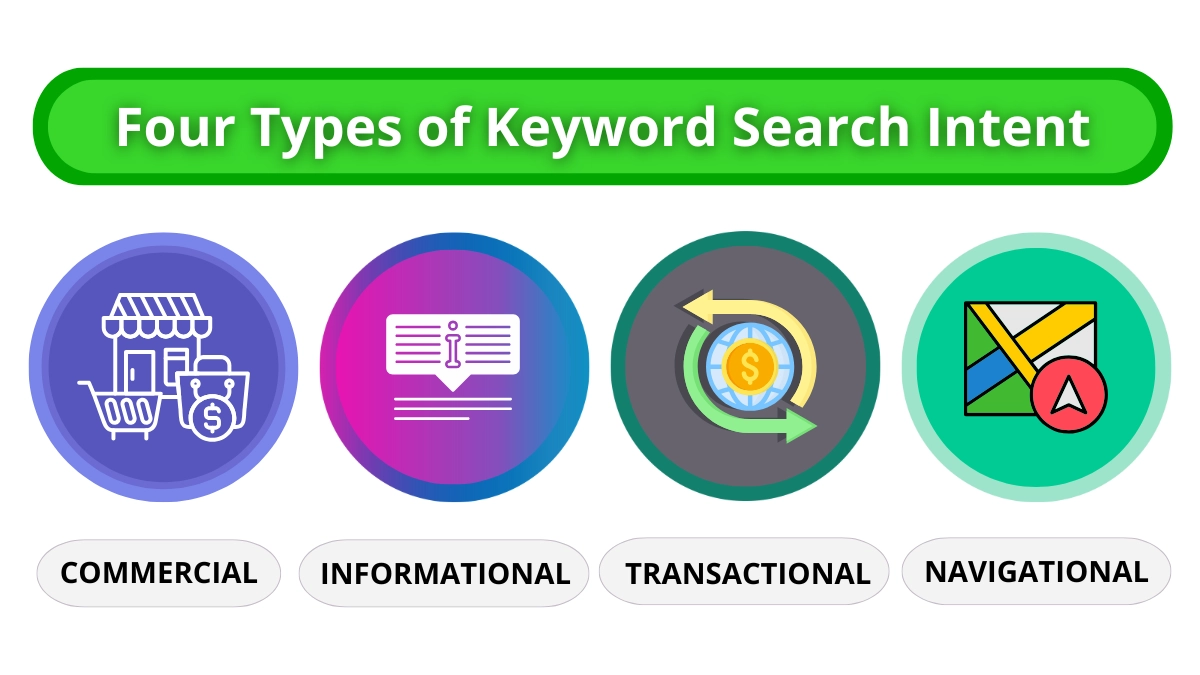
Most search queries fall into a small number of intent categories that reflect different user goals. Understanding these categories helps match each keyword to the right content format.
Below is an overview of the main types of keyword intent and how they typically appear in search behavior.
| Keyword Intent Type | What the User Wants | Example Queries |
| Informational | To learn, understand, or get an explanation | What is keyword intent; keyword density meaning; what is on-page SEO; how content writing works; what is SEO copywriting; how search engines rank pages; what is technical SEO; what is content marketing; how backlinks work |
| Navigational | To reach a specific website, brand, or platform | We-Right Factory website; We-Right SEO wiki; Google Search Console login; Ahrefs dashboard; Semrush keyword tool; LinkedIn login; Netflix account; Canva editor |
| Commercial | To compare options before making a decision | Best content writing services; SEO content writing agency; keyword density checker tools; Istio vs Seoscout; best SEO tools for agencies; content writing pricing comparison; best CRM for small business; best email marketing platforms |
| Transactional | To take action or complete a task | Order SEO content writing; hire content writers; buy SEO audit service; request content writing quote; SEO services for iGaming; subscribe to SEO tools; buy running shoes online; book hotel in Rome |
Keyword intent shows what a user expects to find when they submit a search query. It helps explain why similar keywords can require completely different types of content.
In practice:
- informational intent is best served with clear explanations and educational content;
- navigational intent helps users reach a specific site or platform they already know;
- commercial intent supports comparison and evaluation before a decision;
- transactional intent reflects readiness to take action.
Understanding these differences makes it easier to create content that feels relevant, useful, and aligned with real search expectations.
High-Intent vs Low-Intent Keywords
Keyword intent also helps distinguish between high-intent and low-intent search queries. High-intent keywords usually indicate readiness to act, while low-intent keywords focus on discovery or navigation.
For example:
- High-intent: order SEO content, hire copywriter.
- Low-intent: what is SEO copywriting, content writing meaning.
Both types are valuable, but they serve different roles in a content strategy. High-intent keywords drive action, while low-intent keywords build awareness and trust.
Conclusion
Keyword intent explains what a user truly expects from a search result. It goes beyond keywords themselves and focuses on user goals, behavior, and outcomes. By understanding keyword intent, SEO professionals can create content that aligns with search expectations, improves relevance, and delivers better overall performance in search results.
FAQ
Keyword intent refers to the purpose behind a search query and the result a user expects to find.
Most queries fall into four categories: informational, navigational, commercial, and transactional.
Because search engines reward content that matches user intent, not just keyword usage.



Learn key terms and concepts to navigate content writing, SEO, and iGaming confidently.
