
 EN
EN
 UA
UA

A backlink profile is the full collection of links that point to your site from other websites. It shows authority and signals that your content has value. When a site gets more external links from trustworthy websites, it usually appears higher in Google search results and attracts a larger number of organic visitors. A healthy backlink profile can improve SEO and directly influence visibility. On the other hand, a weak profile can limit website development.
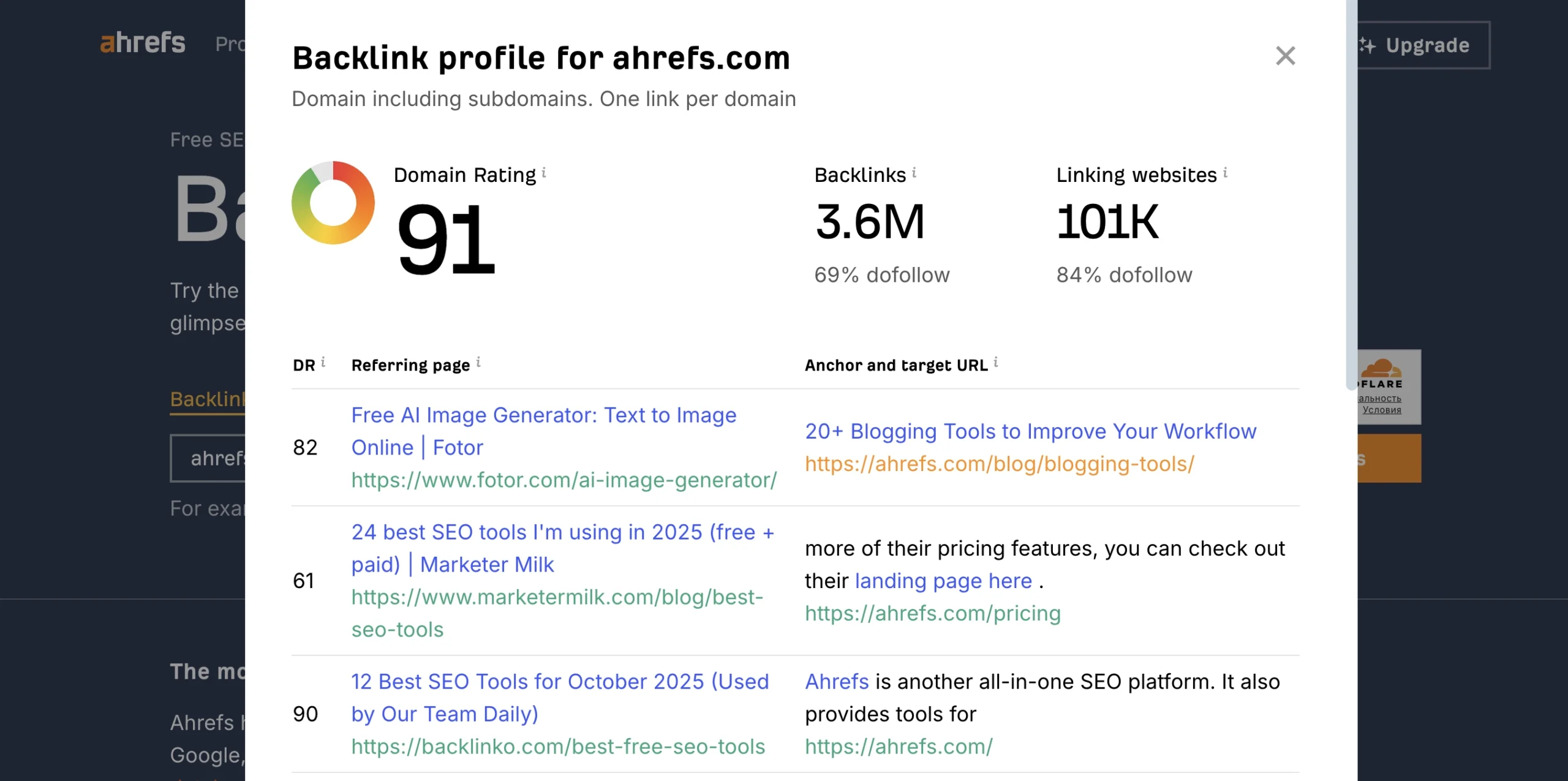
A backlink profile includes a certain number of external links, their quality, the diversity of referring domains, the anchor texts, and shows if these are follow or nofollow links. Each of these factors affects the way search engines rank your website. Let’s look at them closely:
| Factor | Description |
| Number of backlinks | A large volume indicates popularity, but link quality has a stronger impact on rankings. |
| Quality of links | One backlink from a high-authority source is more valuable than dozens from low-quality domains. |
| Diversity of domains | Links from multiple unique websites enhance credibility and reduce the risk of spam signals. |
| Anchor texts | Relevant, varied anchor texts add context and help search engines understand the content’s topic. |
| Follow vs nofollow | Follow links pass ranking authority, while nofollow links mainly provide referral traffic. |
Why Are Backlinks Important for SEO?
Backlinks directly influence search rankings by proving authority and giving search engines signals of trust. A strong backlink profile provides organic traffic growth, as seen when a blog gains links from top news outlets. Google’s algorithm rewards trustworthy external links, but spammy ones can cause penalties. Low-quality links risk decreasing ranking. Comparing both cases in a table highlights the difference:
| Backlink Profile Type | SEO Impact | Additional Notes |
| Few backlinks | Limited authority, slower ranking growth | Search engines view the site as less trusted; organic traffic increases slowly. |
| Many low-quality backlinks | Possible penalties and ranking drops | Spammy or irrelevant links can trigger Google’s algorithmic filters. |
| Fewer but high-quality backlinks | Stable growth and long-term authority | Links from reputable domains build trust and improve visibility steadily. |
| Diverse, high-quality backlink profile | Strong authority, faster indexing, more traffic | Ideal balance for SEO — signals expertise, reliability, and popularity. |
Signs of a Strong Backlink Profile
A solid backlink profile demonstrates that a website is considered credible and authoritative within its niche. Search engines recognize these signals and reward such sites with higher visibility in results.
Here are the main indicators of a strong backlink profile:
- High-quality referring domains. Links come from reputable websites with consistent traffic and good domain metrics.
- Natural link growth. The number of backlinks increases gradually over time rather than in sudden spikes.
- Relevant anchors. Anchor texts match the content context and are varied enough to look organic.
- Low spam score. The majority of links come from clean sources, avoiding link farms or automated networks.
- Diversity of domains. The more unique and authoritative domains link to your site, the more reliable it appears to search engines.
In short, a healthy backlink profile is not just about quantity but about balance — steady growth, link diversity, and relevance all contribute to sustainable SEO performance.
Who Benefits from Monitoring Backlink Profiles?
Monitoring a backlink profile helps those who rely on visibility and traffic. Professions who gain most are SEO professionals, website owners, digital marketers, and content creators. Let’s see what advantages these people get:
- SEO specialists detect website problems and improve ranking tactics.
- Website owners protect the site from harmful links.
- Digital marketers track brand mentions and outreach impact.
- Content creators find the type of content that attracts the most links.
Best Tools for Analyzing Backlink Profiles
To evaluate the quality of a backlink profile, SEO specialists use dedicated tools that collect and organize link data from across the web. These platforms help identify link sources, analyze their authority, and detect potential risks.
Here are some of the most effective tools used in backlink analysis:
| Tool | Key Functions | Best For |
| Ahrefs | Provides a detailed overview of referring domains, link types, anchor texts, and spam indicators. Helps track link growth and detect harmful links. | SEO professionals who need a comprehensive backlink overview. |
| Moz Link Explorer | Measures Domain Authority (DA) and Page Authority (PA), showing how strong a site’s backlink network is compared to competitors. | Comparing domain strength and link quality across websites. |
| Semrush | Offers link audits, lost-link tracking, and competitor analysis to improve link-building strategies. | Marketing teams working on competitive SEO strategies. |
| Majestic | Visualizes backlink networks and evaluates “Trust Flow” and “Citation Flow” to assess link credibility and influence. | Detailed analysis of link trustworthiness and influence metrics. |
Each of these tools helps monitor link health, identify spammy patterns, and measure overall authority – essential for maintaining a balanced and trustworthy backlink profile.
How to Improve Your Backlink Profile?
You can improve a backlink profile by taking the following consistent actions:
- Create high-quality, shareable content
- Build relationships for natural external links
- Disavow toxic or spammy links
- Use tools such as Ahrefs or Moz to analyze and track external links
In order to stay ahead, you may also provide regular audits and do competitive analysis to find missed chances. A clean and strong backlink profile leads to steady growth of your website and better search rankings.
Summary of the Term
A backlink profile reflects how search engines evaluate a website’s authority and credibility. It includes both the quantity and quality of links, showing how trustworthy and relevant the content is. A strong backlink profile improves organic visibility, helps maintain ranking stability, and builds long-term domain authority.
FAQ
A backlink profile is the entire collection of links that lead to your site. It reflects the sources, quality, and relevance of those links, which affect search rankings and overall site authority.
HubSpot explains backlink profiles as the record of every link that leads to your site. It’s used to evaluate link strength, identify harmful ones, and improve SEO performance through better link-building strategies.
A backlink example is when a blog links to your article as a reference. That external link points to your page, which signals credibility and relevance to both readers and search engines.
A backlink profile measures volume, diversity, authority of linking sites, and anchor text use. It shows if your links are trusted or raise spam flags in search engine algorithms.



Learn key terms and concepts to navigate content writing, SEO, and iGaming confidently.
