


Home
 BlogiGaming IndustryWhy LatAm Is Becoming the Most Competitive iGaming Region
BlogiGaming IndustryWhy LatAm Is Becoming the Most Competitive iGaming Region
Why LatAm Is Becoming the Most Competitive iGaming Region
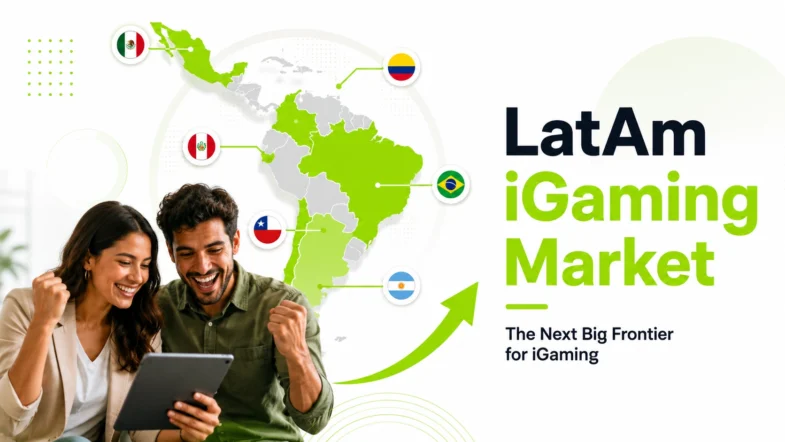
iGaming IndustryLatin America is rapidly turning into one of the most competitive iGaming regions in the world. Market growth, mobile adoption, and evolving regulation are reshaping the landscape. Discover what drives competition and why operators are rushing into LatAm.
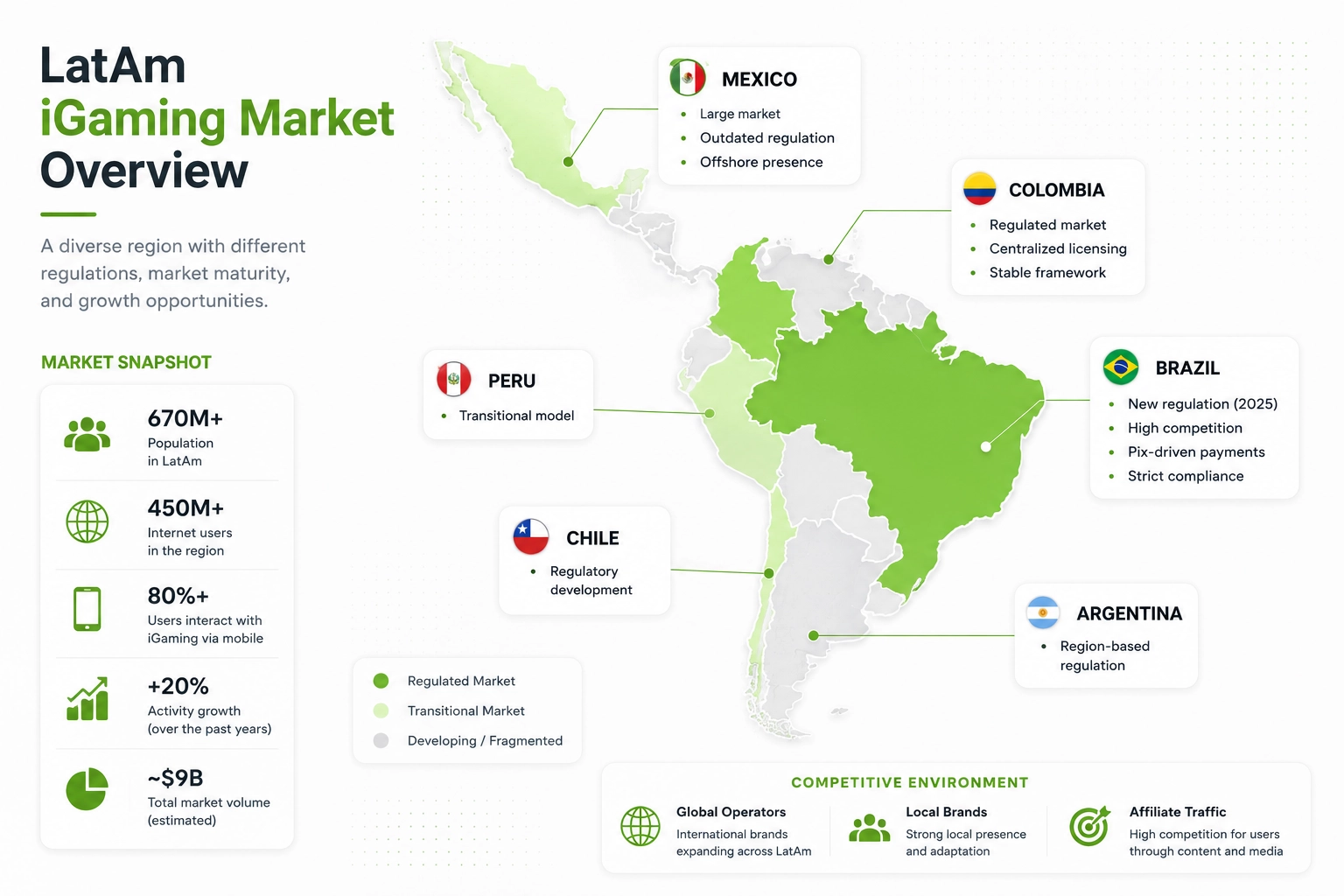
Latin America, over the past five years, has turned into a region where a large share of the global gambling market is actively developing. This is driven by a unique combination of a large audience, the spread of mobile technologies, and the gradual legalization of the market. Currently, around 670 million people live in the region, and most of them actively use their smartphones.
Activity has already increased by more than 20%, and the total market volume may reach 9 billion dollars. One of the reasons for the region’s transformation is the highly competitive environment. At present, global operators, local brands, and a significant unregulated offshore segment operate in the region.
Today, we want to take a deeper look at why LatAm can be considered an ideal space for running an iGaming business, with its massive audience, regulation, and digital infrastructure.
Growth Dynamics: Why LatAm Is Expanding Faster Than Other Regions
There are several reasons why Latin America is demonstrating outpacing growth rates in gambling. Let’s look at three key factors:
- The scale of the audience affects market dynamics. Today, there are more than 450 million internet users in the region, and most of them are the younger generation, which forms the core of gambling consumption.
- Mobile-first consumption model. More than 80% of users interact with gambling products through their smartphones. Most registrations and payments are conducted via mobile devices. An interesting observation is that most new operators in LatAm enter the market immediately with a mobile version, bypassing desktop.
- Regulatory transformation. Historically, the gambling market in Latin America was weakly regulated and fragmented. But over the past few years, the situation has changed dramatically. Brazil, Chile, and Peru are actively implementing their own licensing models. This both strengthens control in gambling and opens the market for the entry of new legal operators.
An additional growth boost was triggered by the COVID pandemic, after which the online segment of the market strengthened. Taken together, all these factors form a unique dynamic – LatAm is growing much more actively than other regions.
Brazil: The Core Driver of Regional Competition
Brazil’s impact on the Latin American gambling landscape is substantial, primarily due to its massive population of 200 million and its rapid transition into a regulated environment. Unlike many jurisdictions that undergo a prolonged “gray market” period, Brazil implemented its regulatory framework on January 1, 2025. This immediate shift forced operators into a highly competitive space from the outset.
Statistical data from the first year of operation highlights the scale of this market. Regulators issued 79 licenses, and the active player base reached 25 million individuals. This figure represents approximately 12% of the national population, solidifying Brazil’s position as a central driver of competitiveness within the regional betting industry.
Licensing and Tax Model
Licensing in Brazil is quite strict. To obtain a license, it is necessary to pay around R$30 million, and it is issued for a period of 5 years. The Ministry of Finance is responsible for issuing licenses in the country. Operators are subject to two types of taxes:
- 12% GGR (gross gaming revenue)
- Corporate taxes (IRPJ, CSLL, PIS, Cofins)

As a result, in the first year alone, the fiscal impact for the market amounted to around R$37 billion in GGR, and R$10 billion entered the state budget through taxes.
The regulator also introduces a number of strict rules that licensed operators must comply with:
- Restrictions on marketing and advertising products;
- Mandatory player verification and AML compliance;
- Operator oversight through SPA (Secretariat of Prizes and Betting).
It is also worth mentioning the payment infrastructure. The Pix payment system is extremely popular in the country and has long been considered the standard for instant payments.
Mexico: Scale Without Full Regulatory Clarity
Mexico is a large and economically mature gambling region in Latin America. However, it is still not fully regulated, and the regulatory system is fragmented. Because of this, competition in Mexico develops somewhat differently than in Brazil and Colombia.
The country has a population of around 130 million people, forming one of the largest markets in Latin America. According to industry data, around 46 million people currently participate in gambling activities, and the total market size is estimated at approximately 1.2 billion dollars. Around 90 million people in the country use mobile internet. As a result, the region becomes an excellent entry point for mobile gambling operators.
Legal Segment and Outdated Regulation
One characteristic of gambling in Mexico is that regulation is based on the Federal Law on Games and Lotteries, adopted in 1947. In 2004, the law was partially adapted for the online environment and is currently formally regulated through SEGOB (Secretaría de Gobernación). However, there is still no comprehensive law for online casinos in the country.
This creates several important limitations:
- There is no separate full licensing model for online casinos.
- Online activity in the country is only possible through partnerships with land-based casinos.
- Foreign operators cannot enter the market without a local partner.
In addition, there is a limit on the number of licensed operators in the country (around 36 major license holders).

Presence of Offshore Operators and the “Gray Zone”
The outdated licensing system leaves a large share of the Mexican market in the gray zone. A significant number of offshore platforms operate in the country, with licensed and unlicensed operators coexisting, and the online segment is effectively not regulated by the regulator.
Operators looking to enter the Mexican market should keep in mind the main drivers of competition:
- Aggressive bonus strategies;
- Competition for traffic through affiliate channels;
- SEO and performance marketing;
- Player retention through promotions and cashback mechanics.
Colombia: A Structured and Regulated Model
Colombia is one of the first gambling regions in Latin America to be fully structured and operate in a regulated environment. The country has a population of about 53 million people. Market licensing is carried out through the state regulator Coljuegos.
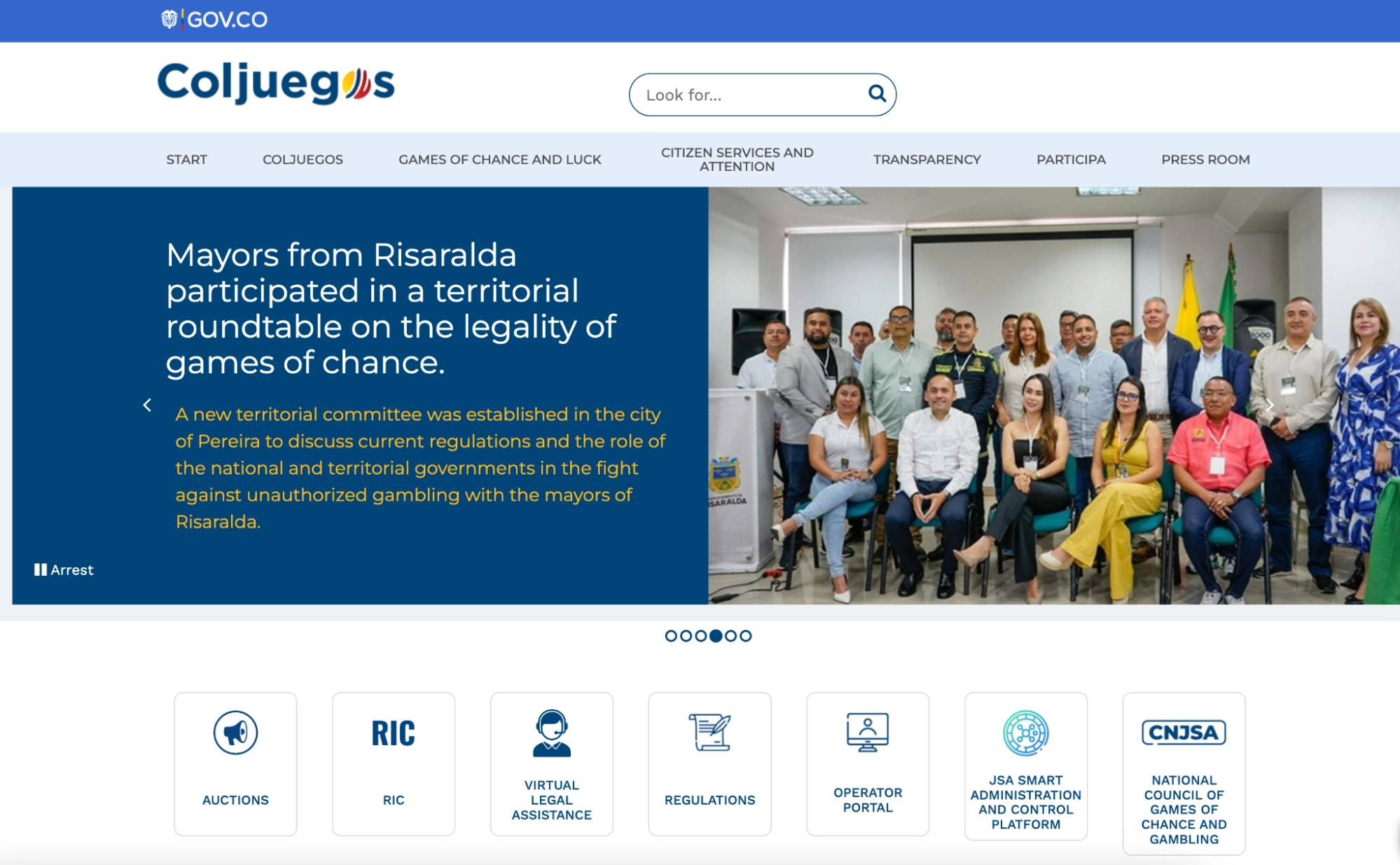
The regulator is responsible for the following:
- Issuance of licenses to online operators;
- Monitoring compliance with all technical standards;
- Blocking the operation of illegal casinos.
The market in Colombia operates under a single national license. An operator must be registered in the country and have a local presence. In recent years, the number of licensed operators has been about 25+ brands. As a result, the market in Colombia is compact and well-controlled.
Stable Legal Framework and Oversight
Colombia’s gambling model is considered one of the most stable throughout Latin America. The market has been regulated since 2016, and all rules are updated gradually in order to avoid abrupt reforms. The Coljuegos regulator actively fights the illegal segment of the market. In recent years, about 8,000 illegal websites and domains have been blocked in the country. It is also worth noting that the country has a fairly transparent tax system:
- 17% income tax for operators;
- Additional licensed payments;
- All revenues from the gambling sector are directed as investments into Colombia’s healthcare system.
How Competition Is Structured
If in Brazil competition is based on scale and regulatory launch, and in Mexico a hybrid model is used, then in Colombia, it is a more “mature” form. Here, the market is not captured chaotically. In order to compete with other operators, it is important to adhere to the following:
- Platform quality and the content placed;
- Focus on retention and usability;
- VIP program casino, bonus systems, and personalization.
The Role of Global Operators in Market Saturation
Large international online casino operators, including Flutter, Entain, Bet365, significantly increase competition with their presence in the Latin American market. This is due to significant investments, adapting the product to local requirements, and aggressive affiliate and performance marketing. As a result, local operators now compete not only among themselves. They are forced to adapt to global standards, offering users increasingly favorable partnership conditions.
Before looking at individual companies, it’s important to understand one thing: global operators don’t just enter LatAm – they reshape how competition works. They bring scale, capital, and structured growth strategies that local brands have to match.
| Operator | Core Strategy | Key Markets | Competitive Impact |
| Bet365 | Multi-vertical expansion (sports + casino + live) with strong localization | Mexico, Colombia, Brazil | Sets product and UX standards, raises user expectations |
| Flutter Entertainment | Market entry through acquisitions and aggressive investment | Brazil | Accelerates market growth and increases pressure on local brands |
| Entain | Focus on regulated markets and local brand partnerships | Brazil, broader LatAm | Strengthens competition through scale and consolidation |
Global operators don’t just add more competition – they raise the bar for everyone. Better products, faster payments, stronger marketing – all of this quickly becomes the new normal. At that point, local brands are no longer competing with each other. They’re trying to keep up with global standards.
Investment in product localization
Global operators are not just entering the Latin American market; they aim to adapt their product to each specific country. In particular, the following measures are carried out:
- Local languages (Spanish/Portuguese);
- Regional odds and sports preferred by the local population (football remains the dominant vertical in the region);
- Interface adaptation for mobile audiences;
- Implementation of local payment systems (for example, Pix in Brazil).
Affiliate Ecosystem and Traffic Competition
Competition for players’ attention in Latin America begins even before the product enters the market – at the SEO stage, within the affiliate ecosystem, and in content sales funnels. This is where the main flow of users is distributed, which leads to rapid saturation of search results. Traffic is growing, while traditional operator promotion models are losing their effectiveness.
SEO as the Main Acquisition Channel
In LatAm, SEO and content marketing remain the primary channels for acquiring new players and the first point of contact with users. There are several statistical indicators in this direction:
- Up to 42% of first deposits in the region come through SEO traffic. These include online casino reviews, rankings, and bonus pages.
- In Brazil, Mexico, and Chile, SEO remains the most stable channel for player acquisition.
- More than 80% of players complete the registration and deposit journey on a mobile device, which increases the importance of search and content funnels.
In practice, users in LatAm find online casinos through queries like “best casino / apuestas online,” after which they land on an affiliate page. As a result, the decision to play is made long before reaching the brand’s page.
Competition for Search Queries
Key high-intent queries (“casino online,” “apuestas deportivas,” “bonus casino”) are quickly occupied by affiliate networks. This leads to several structural effects:
- The SERP is almost entirely composed of casino review sites and rankings featuring industry top lists;
- The only way for new domains to enter organic results is through significant investment;
- The top 10 search results are formed by a limited number of local media networks.
Traffic Economics and Pressure on CAC
The LatAm affiliate market is under constant pressure from rising traffic acquisition costs. In gambling, CPA costs in regulated markets can reach $70–250 in the LatAm segment and are much higher in Tier-1 segments. Ongoing competition between affiliate networks and operators increases the cost per click and per lead by 20–30 percent annually.
Payment Infrastructure as a Competitive Factor
To remain competitive in the Latin American market, operators need to implement local payment methods. This will positively impact deposit conversion, payment frequency, and player trust. Operators should keep in mind that in Latin America, a large portion of the casino audience does not use international bank cards.
The Role of Local Payments in LatAm
Latin America is a market with highly fragmented financial systems. Depending on the country, the level of banking access varies from 55 to 75%. A significant share of users does not have full access to bank cards. At the same time, about 30–45% of the adult population in certain countries lacks a bank account or a plastic card. If a casino operator does not cover local payment systems, it will lose a significant market share, as players simply will not be able to make deposits.
Pix in Brazil – the Main Market Driver
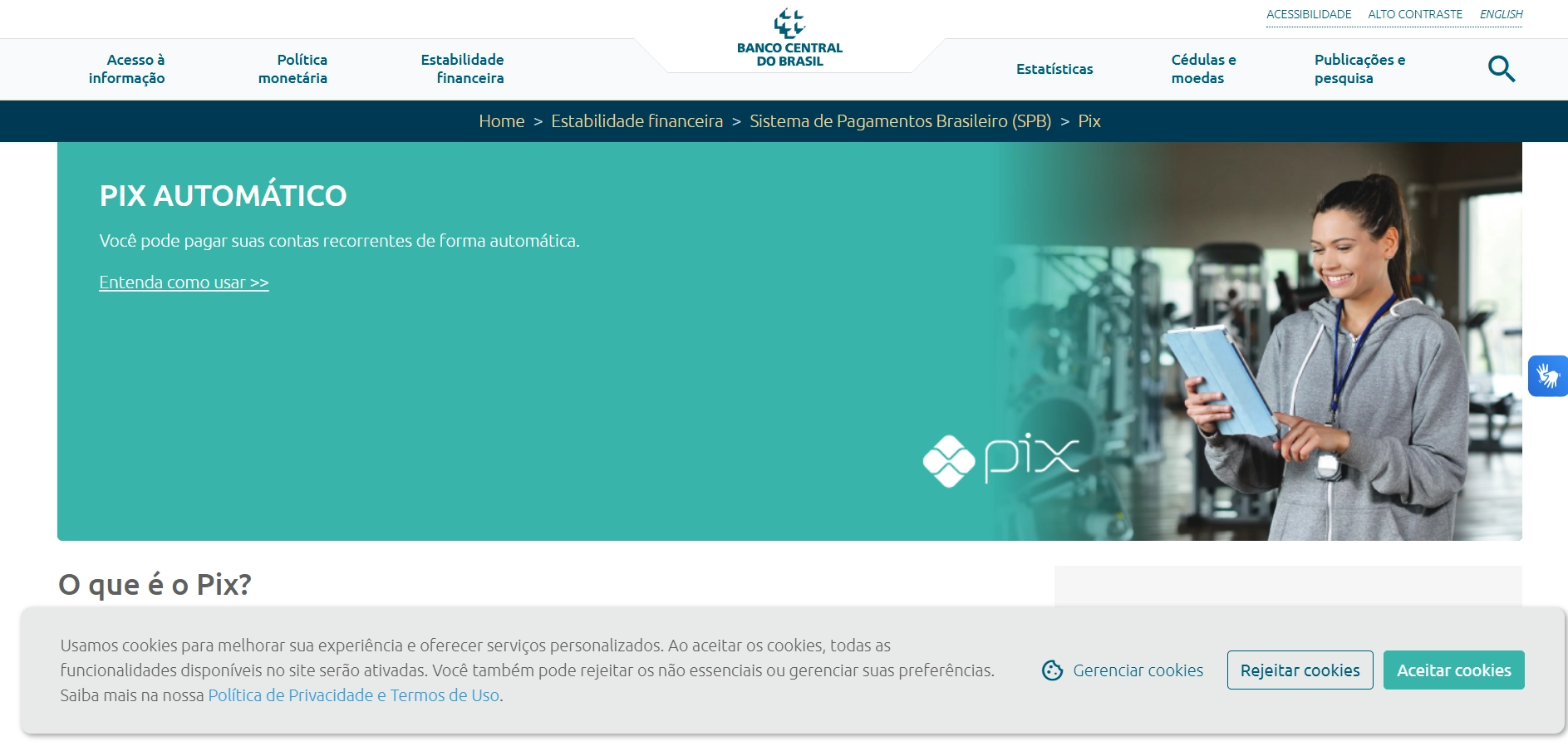
Brazil can be considered the most illustrative example of how payment infrastructure affects competition. The Pix system, which was launched by the Central Bank of Brazil in 2020, has become the dominant payment method in the region. In 2024, the total number of online betting transactions made using this payment system reached 96.72%. This means that approximately 9 out of 10 players use this payment method for transactions.
Read also our article: iGaming Content Services: What They Are and How They Work
The popularity of Pix is driven by the fact that players get access to instant 24/7 transfers and do not pay additional transaction fees.
E-wallets and Alternative Payments
In addition to Pix, there are other payment systems in the region that are in demand among local players:
- Local e-wallets (Mercado Pago, PicPay, etc.)
- Bank instant transfer systems (SPEI in Mexico, PSE in Colombia)
- Cash-based solutions (for example, OXXO in Mexico)
According to industry data, the share of alternative payments in Latin America exceeds 60–70% of all transactions. Local users are abandoning bank cards because they are expensive, and declines occur in 40–60% of cases in certain scenarios.
Regulatory Fragmentation Across the Region
There is no unified regulatory system in Latin America, and because of this, operators often face excessive competition and difficulty scaling their business. This leads to the fact that most operators do not work with the region directly, but rather with a set of individual countries with different rules.
The Region as a Set of Different Regulatory Models
One of the key features of Latin America is extremely fragmented regulation, where each country follows its own path:
| Country | Regulatory Model | Key Characteristics | Market Impact |
| Brazil | New federal model (launched 2025) | Centralized regulation, strict licensing, GGR-based taxation | High entry barriers but large-scale opportunity |
| Colombia | Fully regulated centralized model | Licensing via Coljuegos, stable legal framework, active enforcement | Predictable market with strong compliance requirements |
| Mexico | Outdated hybrid model | Based on 1947 law, partial online coverage, reliance on land-based partnerships | High competition with limited regulatory clarity |
| Argentina | Region-based regulation | Each province sets its own rules and licensing | Complex market entry and fragmented strategy |
| Peru & Chile | Transitional / hybrid models | Ongoing regulatory development and reforms | Early-stage competition with evolving rules |
There’s no single way to enter LatAm – every country requires its own approach. Scaling here isn’t about expansion, it’s about adapting market by market.
Different Tax Models
The tax burden also varies in each country, which new operators should take into account. The current figures are as follows:
- Brazil. ~12% GGR + corporate taxes (IRPJ/CSLL)
- Colombia. About 15–17% GGR + licensing fees
- Mexico. A combined model through local operators and income tax
- Argentina. The tax rate varies depending on the province.
Analytics: How Fragmentation Affects Competition
Since there is no unified regulation in the region, operators are forced to follow a number of rules. Below are the key points to consider:
- Building a separate strategy for each country in the region. Separate licenses, payment solutions, marketing tools, and legal structures are required;
- Increased operational costs. Since the market is fragmented, expenses for compliance, legal matters, localization, and marketing will be higher;
- Difficulties with scaling the business. Latin America differs from the European market. There is no single entry point here; each country becomes a new business case for you.
Why Competition in LatAm Is Stronger Than It Seems
LatAm appears to be a fast-growing gambling market with enormous potential, but in reality it is a saturated, highly competitive environment. Rapid growth leads to immediate market saturation, saturation of acquisition channels, and the continuous creation of high barriers to entry.
- A market with growth that immediately turns into competition.
- Rapid growth = rapid channel saturation. Unlike other markets, in Latin America the overheating stage arrives quickly. Commercial queries (“casino online,” “apuestas,” “bonus”) are quickly occupied by content networks. Growth does not expand the market infinitely; it only accelerates the competition for already available digital assets.
- Regulation creates a high barrier to entry. There is no single license for the entire region, and scaling will entail high financial costs.
- A large audience leads to competition for traffic. Digital demand in Latin America has already been redistributed. The player journey is controlled by content, payments, and the affiliate system.
Not a Gold Rush – a Pressure Test
Latin America is no longer an “emerging opportunity” – it’s a complex, multi-layered competitive environment where growth and pressure scale at the same time. There is no single way to enter the region, and no market behaves the same.
For B2B operators, this means one thing: success in LatAm is not about expansion speed, but about execution quality. Each market requires its own regulatory setup, payment stack, acquisition model, and local positioning.
Operators that treat LatAm as a single region will struggle. Those who approach it as a portfolio of distinct markets – and build flexible, localized strategies – are the ones that actually scale.
FAQ
Why is Latin America becoming a key iGaming market?
Latin America is growing due to its large population, mobile-first behavior, and ongoing legalization of online betting. These factors create both high demand and rapid market expansion.
Which countries drive iGaming growth in LatAm?
Brazil, Mexico, and Colombia are the main drivers. Brazil leads in scale, Mexico in market size despite regulatory gaps, and Colombia in structured regulation.
Is online gambling fully regulated in Latin America?
No, regulation varies by country. Some markets like Colombia are fully regulated, while others like Mexico and Argentina remain fragmented or partially regulated.
Why is competition so high in LatAm iGaming?
Competition is high because global operators, local brands, and affiliate platforms all compete for the same users, often in fast-growing but quickly saturated markets.
What role do payments play in LatAm gambling markets?
Local payment systems are critical. Operators that support regional solutions like Pix or local e-wallets see higher conversion rates and better user retention.



You might also like
Discover other helpful articles handpicked for you, based on popular topics and recent publications.

How do casinos enter new GEOs without penalizations or even losing traffic? The first step is localization. Compare the content for EU, US, LatAm, and Asian players to how we adapt it based on legal requirements.
 May 27, 2026
 309
309

iGaming content services go far beyond writing alone. This guide explains what they include, how strong teams handle production, and why serious brands treat content as part of business infrastructure rather than simple publishing support.
May 1, 2026
288
Your First 1,000 Words,
Free of Charge
Free of Charge
See firsthand the quality of our content creation services. Complete the form to get a personalized 1,000-word sample tailored to your needs.