
 EN
EN
 UA
UA
Home
 BlogGambling RegulationGambling Regulation in Germany: How the System Is Organised
BlogGambling RegulationGambling Regulation in Germany: How the System Is Organised
Gambling Regulation in Germany: How the System Is Organised
Gambling RegulationGermany regulates its gambling market through a central authority with nationwide powers. This article explains how the GGL operates, what it controls, and how the regulatory system is structured.
Gambling regulation in Germany is exercised through a centralised public authority responsible for supervising cross-state gambling activities. Since 2021, these cross-state regulatory functions have been exercised by a single public authority, mandated by all 16 federal states to oversee online and interstate gambling activities.
The regulatory framework is designed to ensure player protection, market integrity, and uniform enforcement across all federal states.
Gambling Regulatory Authority of Germany – Key Information
Gambling regulation in Germany is carried out through a dedicated public authority established by interstate agreement. Below is the official reference information for the national gambling regulator.
| Parameter | Details |
| Official name | Gemeinsame Glücksspielbehörde der Länder (GGL) |
| Legal basis | Glücksspielstaatsvertrag 2021 (GlüStV 2021) |
| Year of establishment | 1 July 2021 |
| Legal status | Anstalt des öffentlichen Rechts |
| Jurisdiction | Cross-state gambling offers across Germany |
| Regulatory scope | Online and interstate gambling, particularly internet-based offers |
| Headquarters | Halle (Saale), Germany |
| Supervising authority | 16 federal states of Germany |
| Governing body | Executive Board |
| Statutory representative | Ronald Benter, Executive Board (Statutory Representative) |
| Official website | www.gluecksspiel-behoerde.de |
| Contact email | [email protected] |
| Phone number | +49 345 52352 0 |
| Registers maintained | Whitelist of licensed operators |
| Licensing authority | Yes |
| Supervisory powers | Yes, including enforcement and blocking measures |
The GGL is the primary authority responsible for licensing, supervision, and enforcement within Germany’s national gambling regulatory system.
Legal Framework of Gambling Regulation in Germany
The current system of gambling regulation in Germany is based on the Glücksspielstaatsvertrag 2021, an interstate treaty adopted by all 16 federal states. This legal framework established uniform rules for gambling activities and transferred cross-state regulatory powers to a central authority.
Under this framework, gambling is permitted only under state supervision and control, particularly where activities extend beyond the territory of a single federal state or are offered online.
The establishment of the GGL marked a structural shift toward centralised regulation while preserving Germany’s federal administrative structure.

Federal Structure of Gambling Regulation in Germany
Germany applies a federal model of gambling regulation, under which regulatory powers are distributed between state-level authorities and a central interstate body. While gambling legislation is adopted jointly by the federal states through interstate treaties, administrative responsibilities differ depending on the territorial scope of the gambling activity.
To ensure consistent supervision of cross-state and online gambling, the 16 federal states transferred specific regulatory powers to a single authority. This structure allows Germany to maintain regional autonomy for land-based gambling while applying uniform regulatory standards to activities that extend beyond individual state borders.
Under this model:
- cross-state and online gambling is regulated centrally;
- land-based gambling remains under state authority;
- enforcement powers are divided according to territorial reach.
Germany’s federal structure requires a dual regulatory system that combines state-level oversight with centralised control over cross-border gambling activities.
Institutional Role of the GGL in Germany
The Gemeinsame Glücksspielbehörde der Länder acts as the national regulator for cross-state gambling offers, with a primary focus on internet-based gambling services.
Its institutional mandate includes:
- regulating interstate gambling markets;
- ensuring compliance with statutory requirements;
- coordinating enforcement actions across federal states.
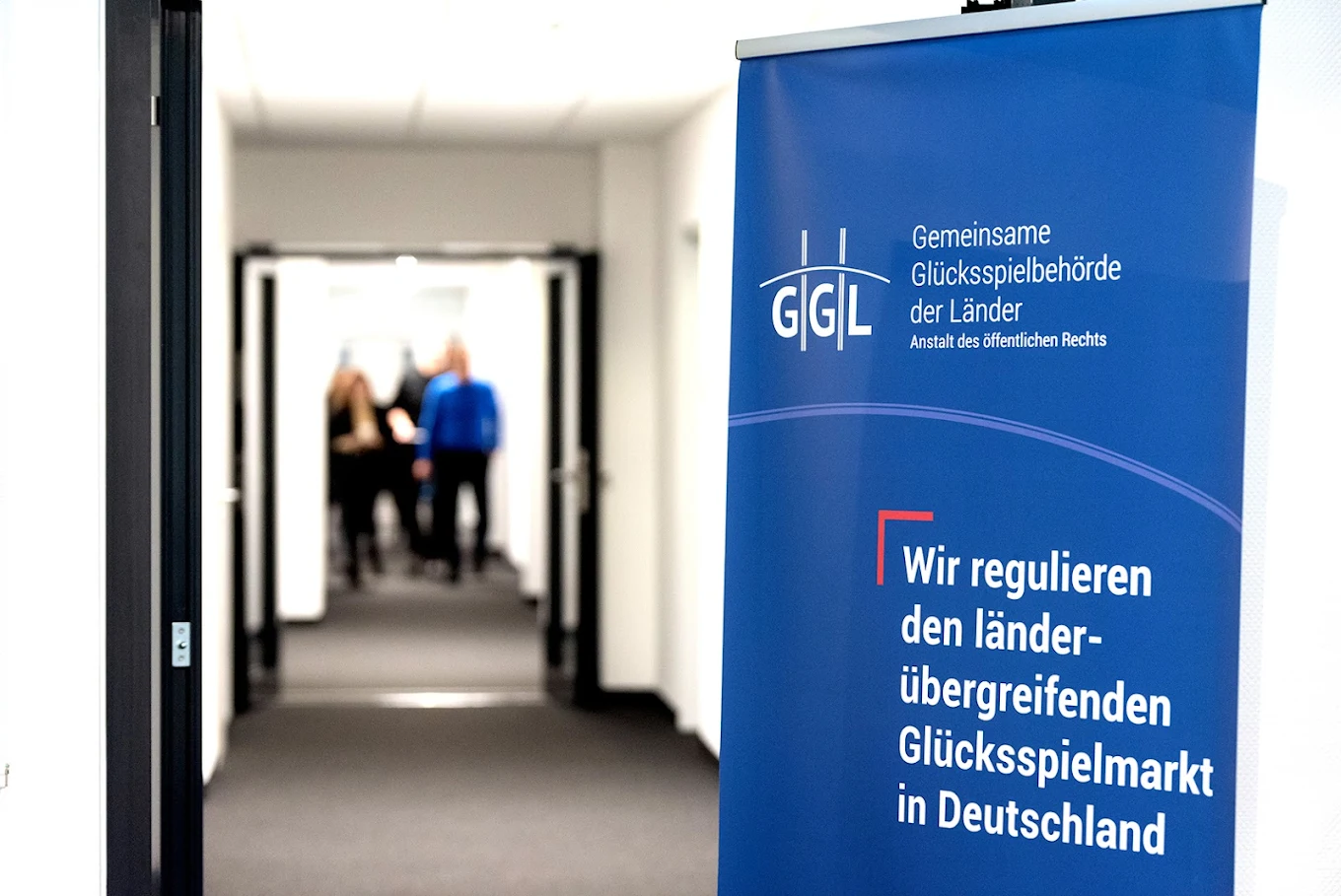
Unlike state-level gambling authorities, the GGL operates across state boundaries, providing a unified regulatory approach for online gambling in Germany.
This structure allows Germany to apply consistent standards while maintaining federal oversight.
Licensing Powers and Market Access Control in Germany
Licensing in Germany is built around centralised authorisation for cross-state gambling activities, reflecting the federal structure of the regulatory system. The Gemeinsame Glücksspielbehörde der Länder (GGL) acts as the sole licensing authority for gambling products offered online or across the borders of individual federal states.
Under the Glücksspielstaatsvertrag 2021, the licensing authority in Germany is assigned to the GGL for gambling formats that require uniform nationwide regulatory standards. This approach is intended to ensure consistent supervision, technical oversight, and enforcement across Germany, particularly in areas where decentralised regulation would be ineffective.
In Germany, licensing establishes an ongoing regulatory relationship rather than a one-time approval. Licensed operators remain subject to continuous supervision, compliance monitoring, and enforcement measures throughout the validity of their authorisation.
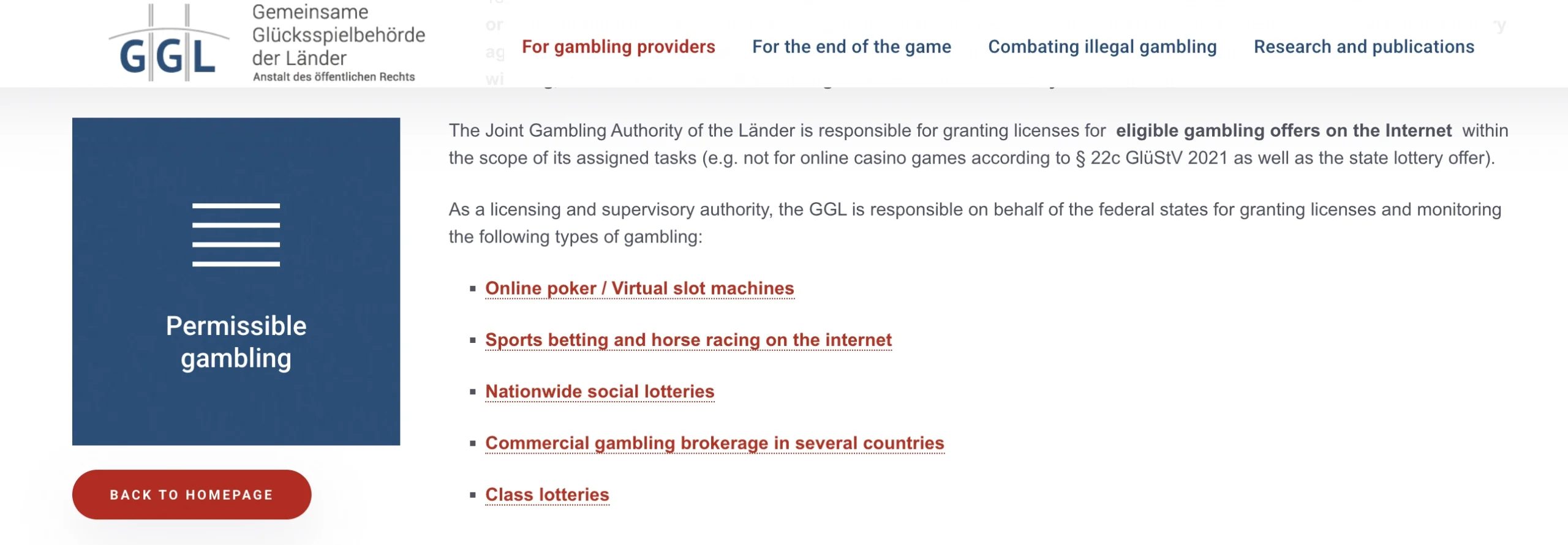
Gambling activities subject to central licensing in Germany include:
- online poker and virtual slot games;
- online sports betting;
- horse betting offered via the internet;
- nationwide social lotteries;
- commercial gambling brokerage operating in multiple federal states;
- class lotteries.
Licensing in Germany functions as a permanent regulatory instrument rather than a single point of market entry.
Social Protection and Preventive Gambling Measures in Germany
Gambling regulation in Germany includes a defined social protection mandate embedded directly into the regulatory framework. Preventive measures form a core part of the GGL’s responsibilities and are treated as an integral element of market supervision.
Within this framework, gambling regulation in Germany includes:
- official reporting channels for suspected illegal gambling activities;
- information portals enabling regulatory notices and submissions;
- access pathways to information and referral resources for individuals affected by gambling-related harm;
- cooperation with public health institutions and scientific research bodies.
These mechanisms support early detection of regulatory breaches and enable coordinated institutional responses. In Germany, social protection is implemented alongside enforcement measures rather than as a separate policy layer.
Preventive gambling measures in Germany are designed to complement regulatory supervision and strengthen the overall integrity of the gambling market.
Transition Period and Phased Transfer of Powers in Germany
The establishment of the German gambling regulator did not result in immediate full operational authority. Instead, regulatory responsibilities were transferred in clearly defined phases, allowing for institutional build-up and coordinated enforcement.
| Period | Key milestone |
| July 2021 | Formal establishment of the GGL as a public-law institution, without full operational powers |
| 2022 | Commencement of initial regulatory and enforcement activities |
| January 2023 | Assumption of full regulatory responsibility under the Glücksspielstaatsvertrag 2021 |
Read also our article: Gambling Regulation in the Slovak Republic: How the Regulatory System Is Structured
This timeline reflects the phased transfer of regulatory powers to the GGL within Germany’s gambling supervision framework.
Supervision, Enforcement, and Illegal Gambling Control in Germany
A core element of gambling regulation in Germany is the active supervision of licensed operators and the suppression of illegal gambling activities.
The GGL is empowered to:
- supervise compliance with licence conditions;
- investigate unauthorised gambling offers;
- restrict or block illegal gambling services;
- initiate measures to interrupt payment flows linked to illegal operations.
Enforcement actions focus particularly on online gambling, where cross-border and multi-state risks are most significant.
Registers and Technical Oversight Systems in Germany
Germany’s gambling regulation relies on centralised registers and technical oversight mechanisms designed to support supervision, enforcement, and market transparency. These systems enable coordinated regulatory action across federal states and form an operational backbone of gambling regulation in Germany.
| System | Purpose |
| Whitelist | Public register of licensed gambling operators authorised to operate in Germany |
| LUGAS | Cross-state gambling supervision system supporting regulatory oversight |
These core systems allow authorities to verify market legality, monitor licensed activity, and ensure uniform enforcement of regulatory requirements across Germany.
| Tool | Function |
| Payment blocking measures | Disruption of payment flows linked to illegal or unauthorised gambling offers |
| Reporting and notice portals | Collection and assessment of notices related to illegal gambling and unauthorised advertising |
In addition to formal registers, Germany’s technical oversight framework includes mechanisms to identify and suppress unauthorised gambling activity. These tools support enforcement actions by enabling the restriction of illegal offers and the interruption of associated financial transactions.
The regulatory system also includes structured reporting channels that allow regulatory authorities to receive, process, and assess information on potential violations. Together, these registers and technical tools extend oversight beyond licensing and support continuous market monitoring within Germany’s gambling regulatory system, administered by the Gemeinsame Glücksspielbehörde der Länder.
Social Protection and Preventive Functions in Germany
Beyond regulatory enforcement, gambling regulation in Germany incorporates a strong social protection mandate.
The GGL’s responsibilities include:
- promoting youth and player protection;
- supporting prevention of gambling addiction;
- cooperating with scientific research and public institutions;
- providing reporting channels for illegal gambling and harmful practices.
Dedicated information portals and reporting mechanisms allow individuals and institutions to report violations and access support resources related to gambling-related harm.
These measures reflect the preventive and compensatory objectives embedded in Germany’s gambling regulatory model.
Governance and Decision-Making Framework of the GGL
The governance structure of the GGL is defined by law and ensures direct accountability to the federal states.
Executive leadership
The authority is led by an Executive Board, with Ronald Benter serving as statutory representative since 1 July 2021.
Institutional accountability
The GGL operates as a public-law institution mandated by the 16 federal states, ensuring:
- centralised decision-making;
- coordinated enforcement;
- independence from market participants.
This governance model links regulatory authority, oversight, and accountability within a single institutional framework.
Scope of Authority vs State-Level Responsibilities in Germany
Although the GGL holds extensive regulatory powers, gambling regulation in Germany remains functionally divided between the central authority and state-level regulators. This division is explicitly defined by law.
Distribution of regulatory responsibilities in Germany
| Area | Responsible authority |
| Online and cross-state gambling | GGL |
| Terrestrial gambling venues | State gambling authorities |
| Player exclusion system (OASIS) | Regierungspräsidium Darmstadt |
| Civil claims related to gambling | Civil courts |
| Advisory services on gambling concepts | Not permitted to regulators |
By clearly separating competencies, Germany avoids overlapping authority and ensures legal certainty for regulators and market participants alike.
Source Attribution
According to the official information published by Gemeinsame Glücksspielbehörde der Länder (GGL).
Frequently Asked Questions
What is the main gambling regulator in Germany?
The main regulator is the Gemeinsame Glücksspielbehörde der Länder (GGL), responsible for cross-state and online gambling regulation.
When was the GGL established?
The GGL was established on 1 July 2021 under the Glücksspielstaatsvertrag 2021.
Does the GGL issue gambling licences?
Yes. The authority grants licences for specific categories of online and interstate gambling activities.
Does the GGL regulate all gambling in Germany?
No. Terrestrial gambling and certain systems, such as OASIS, remain under state-level jurisdiction.



You might also like
Discover other helpful articles handpicked for you, based on popular topics and recent publications.
Austria applies a concession-based gambling model rooted in federal law. This article explains who regulates gambling in Austria, how licensing works, and which authorities supervise the market, based only on official sources.
 March 5, 2026
 241
241
Spain operates a centralized gambling regulatory system for online activities, backed by national legislation and an independent supervisory authority. This article explains how the system works, who regulates gambling in Spain, and the regulator's responsibilities.
 February 9, 2026
196
February 9, 2026
196
India does not operate under a single gambling regulator. This article explains how gambling regulation in India actually works, who holds authority, and what the current legal framework allows and restricts.
February 5, 2026
226
Indonesia follows a strict prohibition model when it comes to gambling. This article outlines how gambling regulation in Indonesia works, which laws apply, and how online gambling is enforced in practice.
February 4, 2026
301
Ireland has introduced a new national regulator to oversee gambling, betting, and certain lottery activities. This article explains how gambling regulation in Ireland is organised, what the GRAI controls, and how the licensing system is being implemented.
February 4, 2026
146

Gambling Regulation in Slovakia is managed by a central state authority with nationwide powers. We break down its legal foundation, supervisory role, licensing functions, and enforcement mechanisms.
January 21, 2026
120